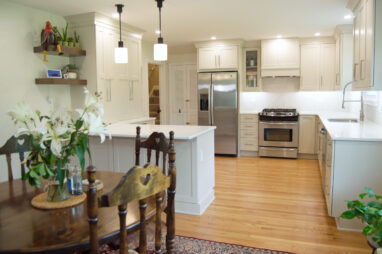
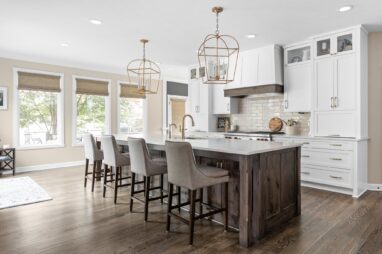
Main Line Modern: Balancing Historic Architecture with Contemporary Luxury Kitchens
Homes throughout Radnor, Lower Merion, and Chestnut Hill carry a kind of architectural weight that newer construction simply cannot replicate. Deep moldings, generous proportions, and a sense of permanence define these properties, and many owners want their kitchens to feel just as current and high-functioning as a brand-new build, without erasing the character that drew them to the home in the first place.
The Challenge of Renovating a Historic Home
Older homes were not designed around modern appliances, open sightlines, or the way families actually gather in a kitchen today. Renovating one of these spaces means solving a real design puzzle: how do you introduce contemporary function without making the kitchen feel disconnected from the rest of the house?
Inset Cabinetry as a Bridge Between Eras
Inset cabinetry, with doors and drawers set flush within a traditional face frame, naturally echoes the craftsmanship found in older millwork and trim. It reads as considered and substantial rather than mass-produced, which makes it a natural fit for kitchens in homes built decades or even a century ago.
Custom Paint Matching for a Cohesive Palette
Few things disrupt the flow of a historic home faster than a kitchen painted in a color that feels disconnected from the rest of the house. Custom paint matching, including shades inspired by classic, heritage-driven palettes, allows a new kitchen to feel like it has always belonged, rather than standing apart as an obvious renovation.
Hidden Appliances That Preserve Architectural Lines
Integrated appliance panels allow refrigerators, dishwashers, and even range hoods to disappear behind matching cabinetry fronts, preserving the visual rhythm of a historic kitchen instead of interrupting it with stainless steel. The result is a space that feels curated rather than retrofitted.
Transitional Design: The Best of Both Worlds
Transitional design intentionally blends traditional details, like inset doors, furniture-style legs, and classic hardware, with the clean lines and functional layouts homeowners expect today. It is one of the most effective approaches for a Main Line property where history and modern living both need to be respected.
Why This Balance Matters to Resale and Daily Living
A kitchen that fights against the architecture of its home rarely ages well, either in how it feels to live with or how it performs on the resale market. Thoughtful, historically sympathetic design tends to hold its value and its appeal far longer than a trend-driven renovation that feels disconnected from the property around it.
A Design Partner Who Understands the Main Line
JA Kitchen & Bath has built a reputation for creating unique, thoughtful, and creative designs that balance craftsmanship, function, and affordability, and we understand the particular sensitivity that historic Main Line homes require. We know that a kitchen renovation is a major decision, and we take the architectural character of your home as seriously as you do.
Visit Our Showroom in Broomall, PA
We invite homeowners throughout the Main Line, Delaware County, Montgomery County, Chester County, Bucks County, and Philadelphia to schedule an appointment at our Broomall showroom. Bring photos of your home’s existing details, and let us help you design a kitchen that feels like it was always meant to be there.
Renovating a historic home is never a one-size-fits-all process, and we approach each project as its own puzzle, shaped by the architecture you already love and the way your family actually wants to live in the space today.
From the first walkthrough, our designers pay close attention to existing moldings, ceiling heights, and window proportions, using those details to inform a cabinetry plan that complements the home rather than competing with it.
The goal is always a kitchen that feels like a natural continuation of the rest of the house, not an addition that announces itself as new the moment you walk in.